
MoodWallet: Money Management
Jomo LabsFinance
4.341.00 Reviews
- Version
- 2.12.0
- Installs
- 10.00K
- Age Rating
- Everyone
Screenshots

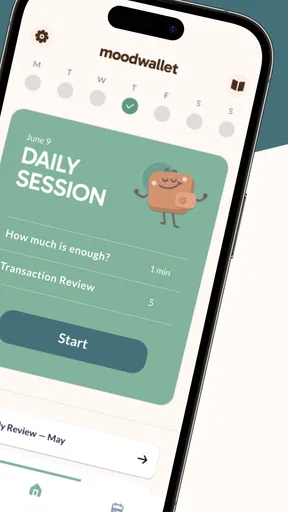
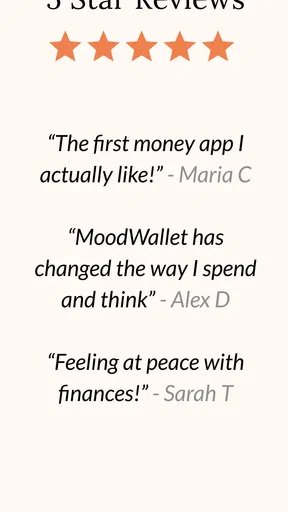

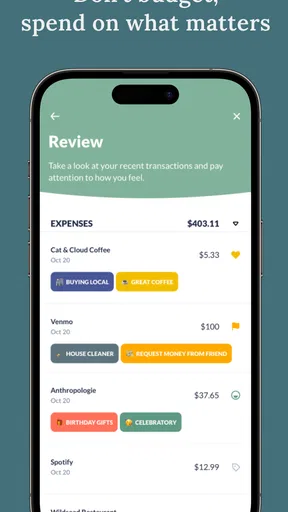
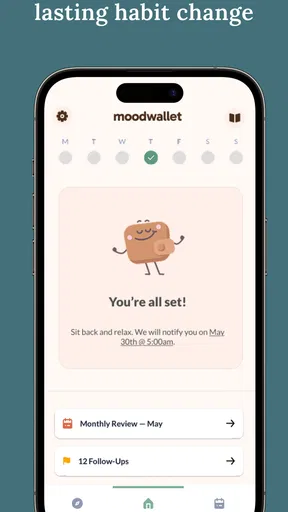
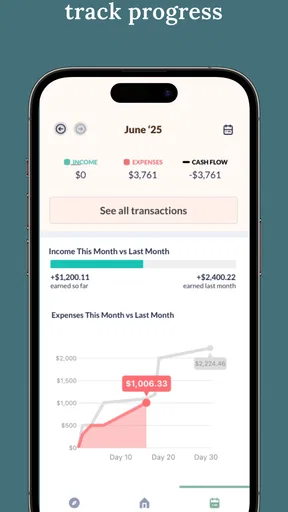
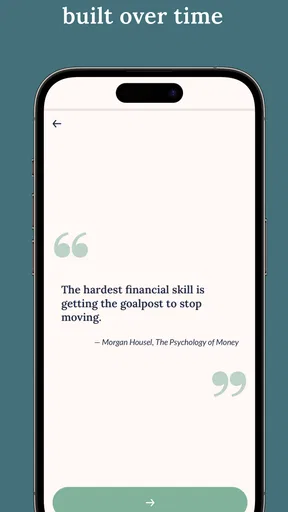
Our Review of MoodWallet: Money Management
 Analysis by Appyee
Most money apps ask me to begin with numbers: income, bills, categories, limits, and a promise that discipline will follow. MoodWallet: Money Management starts from a different place. Its focus is the emotional side of spending, which makes it interesting for anyone who knows exactly what they should do with money but still buys things when tired, bored, anxious, or looking for a quick lift. I found it more useful as a pause-and-awareness tool than as a traditional financial dashboard.
That distinction matters before you install it. This is a free finance app from Jomo Labs, available for Everyone, with optional in-app purchases ranging from $6.99 to $89.99 per item. It has a 4.3 average from 154 ratings, with 10K+ installs, so it is established enough to have attracted a real user base while still feeling more focused than the crowded budgeting apps I have tried. The current version is 2.12.0, and it runs on Android 7.0 or later.
From an emotional spending trigger to a clearer decision
I find the most useful question to ask before opening a shopping app is not whether I can afford an item, but what I expect it to fix for me right now. Naming that expectation gives me a practical way to pause without turning every purchase into a test of character. From there, I can look at how a brief check-in fits into an ordinary day.
Starting with the moment before the purchase
The best way to use MoodWallet is not to open it after a month of spending and expect it to explain everything. I get more from it when I use it close to the moment I feel an urge to buy. That could be browsing late at night, adding unnecessary items to an online cart, or deciding that a stressful day deserves a reward. The starting condition is not “I need a perfect budget.” It is “I am about to make a money decision, and I am not completely sure what is driving it.”
This makes the app approachable for people who dislike spreadsheets. I do not have to translate every purchase into a detailed financial system before I can begin reflecting on it. Instead, the experience is centered on connecting spending with mood and intention. That is a meaningful difference from apps built mainly around account balances and category totals.
In practical terms, I would open it before confirming a purchase rather than treating it as a monthly report. That small change turns the app into a speed bump. It does not necessarily stop me from spending, and it should not be treated as a magic restriction, but it can create enough space to ask whether the purchase solves a real problem or simply responds to a temporary feeling.
A realistic everyday workflow
Imagine I have had a difficult afternoon and start looking at clothes online. I see a discounted jacket, even though I already have similar ones. The usual alternative is to rely on willpower, close the page, and hope the urge disappears. A conventional budgeting app might tell me whether the purchase fits a clothing category, assuming I have already entered accurate limits. MoodWallet is more relevant at this earlier point because the question is not only “Can I afford it?” but also “Why do I want it right now?”
I would use the app as a short check-in. First, I identify the feeling behind the urge. Then I consider what I expect the purchase to change. Finally, I compare that expected benefit with the fact that the desire appeared during a stressful moment. This sequence is simple, but it is more useful than a generic warning about overspending because it gives the decision a personal context.
The important insight is that the app works best when I record the emotional pattern, not just the transaction. If the same type of purchase keeps appearing after difficult workdays, the useful discovery is not merely that I spent money on clothing. It is that shopping has become a recovery ritual. That knowledge can lead to a different response, such as taking a walk, calling someone, or waiting until the next day before buying. The app does not need to replace those alternatives to help me notice the pattern.
Turning reflection into a repeatable habit
I would not use every check-in as an essay. Long entries make a money habit feel like homework, especially when I am already tired. A better workflow is to keep the first pass brief and return later only when a pattern seems important. The value comes from consistency and honesty, not from writing the most polished explanation of every purchase.
One practical technique is to use the app at three points: before an emotionally charged purchase, shortly after an unplanned purchase, and during a calm weekly review. Each point answers a different question. Before spending, I can test the urge. After spending, I can compare the expected feeling with the actual result. During review, I can look for repeated triggers. This gives the app a beginning, middle, and end instead of reducing it to a one-time self-assessment.
That workflow also prevents a common mistake: using financial tools only when I feel guilty. If I open MoodWallet exclusively after making a purchase I regret, the experience can become a punishment. Using it before and after spending makes it more neutral. I am not trying to prove that every purchase was bad; I am trying to understand which decisions feel deliberate and which ones happen automatically.
Where the information goes next
The handoff from an emotional observation to a money decision is where this app feels most distinctive. A mood note by itself is not enough. I need to connect it to an action: wait, buy, remove an item, choose a cheaper option, or accept the purchase without self-criticism. I found that the app’s usefulness depends on making that handoff explicit in my own routine.
For example, if I notice that I often shop when I am avoiding a difficult task, the next step is not automatically to ban shopping. A more realistic response might be a waiting rule for nonessential items. If I still want the item after the pause, the purchase may be intentional. If the desire fades, I have learned that the trigger was stronger than the need. This approach is more flexible than a strict budget category because it accounts for the reason behind the behavior.
Another useful handoff is between the app and my ordinary banking routine. MoodWallet should not be the only place I check whether my finances are safe. My bank, payment provider, or conventional budget tool remains better for balances, scheduled payments, transaction records, and account-level accuracy. I use this app to add emotional context, then rely on those other tools for the hard financial facts. Treating it as a companion rather than a replacement prevents unrealistic expectations.
What the process can reveal
The result I look for is not a perfect record or a sudden refusal to spend. It is a clearer distinction between purchases that support my life and purchases that briefly regulate my mood. That distinction can be surprisingly practical. A planned meal out with friends may be expensive but satisfying, while an unplanned order placed during frustration may be cheap yet leave me feeling worse. A basic category system may treat both as discretionary spending; an emotion-aware review helps explain why they feel different.
This is also where MoodWallet can help people who already know how to budget but struggle to follow their own plans. The obstacle is often not a lack of information. It is the moment when an emotion overrides information. By bringing that moment into view, the app can make a familiar budget more usable. I would especially recommend it to someone who repeatedly says, “I know where my money goes, but I do it anyway.”
There is a second result that is easy to overlook: reduced shame. A spending pattern becomes easier to change when I can describe it without labeling myself as irresponsible. The app’s emotional angle encourages curiosity, which is more productive than replaying a mistake. That does not remove accountability. It simply makes it easier to examine what happened and decide what to do next.
Three less obvious ways I would use it
First, I would use MoodWallet to test whether a spending rule is too strict rather than assuming every failure is a character flaw. If I repeatedly break a limit during predictable situations, the problem may be that the plan ignores real needs or social commitments. Recording the mood around those moments can show whether I am dealing with impulse, exhaustion, or an unrealistic target. The adjustment might be to redesign the rule, not just tighten it.
Second, I would use it after a purchase that turned out well. Money reflection often focuses only on regret, but positive examples are valuable too. If a small expense genuinely improved a difficult day without causing later stress, that is useful information. I can learn which forms of spending feel restorative and which merely provide a short distraction. This helps create a personal definition of “worth it” instead of relying on blanket advice to spend less.
Third, I would use the app to identify the point at which an urge becomes a transaction. There may be a difference between browsing, saving an item, adding it to a cart, and paying. Noticing that sequence can reveal where a pause is most effective. For one person, the best intervention may be before browsing; for another, it may be the final payment screen. This is a more precise workflow than simply promising to exercise more self-control.
How it compares with ordinary budgeting apps
Traditional budgeting apps are stronger when I need a complete financial picture. They are designed for categories, limits, recurring obligations, and checking whether actual spending matches a plan. If I am trying to prepare for a major bill or understand cash flow, I would choose that kind of tool first. MoodWallet does not occupy the same role in my routine.
Its advantage is the human moment that most financial dashboards flatten into a transaction. A standard record may show where money went, but MoodWallet encourages me to consider what was happening internally when I spent it. That makes it a better fit for impulse spending, emotional shopping, and the gap between financial knowledge and financial behavior.
There is a trade-off. A mood-centered approach can feel less concrete when I want exact totals or a comprehensive overview. It also depends heavily on my willingness to be honest and consistent. A bank-connected system may capture transactions automatically, while an awareness tool asks me to participate. For someone who wants effortless tracking, this difference could become the main source of friction.
Where the flow breaks down
The workflow breaks when I expect the app to do the work of a full money-management system. If I need detailed account monitoring, formal bill planning, or a precise spending forecast, I would look elsewhere and use MoodWallet only alongside that system. Its emotional perspective is valuable precisely because it is narrower; asking it to cover every financial task would weaken the reason to use it.
It can also break when I open it only after the decision has already been made. Once the payment is complete, reflection may still teach me something, but the opportunity to interrupt the impulse has passed. I would keep the app easy to reach and use it at the first sign of an emotionally loaded purchase. If that feels too demanding, a conventional tracker with automatic records may be more practical.
Another limitation is that self-observation can become uncomfortable. Some users may find it tiring to attach feelings to spending, especially if money already causes anxiety. In that situation, I would start with one recurring pattern rather than reviewing every transaction. The app is most helpful when it creates manageable awareness, not when it turns every purchase into a psychological investigation.
The optional purchase model is another consideration. The app itself is free, but in-app items cost between $6.99 and $89.99 each. I would begin with the free experience and decide whether the additional material genuinely improves my routine before paying. Anyone trying to reduce unnecessary spending should be especially deliberate here: an app about spending habits should not become another impulse purchase.
Who should try it and who should skip it
I think MoodWallet is a strong choice for someone who understands basic budgeting but keeps spending in response to moods. It is also a good fit for people who dislike rigid financial systems, want a gentler way to examine habits, or need help turning vague regret into specific observations. The Everyone age rating makes it broadly approachable, although younger users would still benefit from guidance when making significant financial decisions.
I would skip it as a primary tool if my main goal is automatic transaction management, investment tracking, debt schedules, or detailed household accounting. It is also not the right match for someone who refuses to log or reflect on spending. The app’s central benefit comes from the handoff between a feeling and a choice; without that participation, it becomes much less useful than a tool that records everything automatically.
After using it as a companion to ordinary financial checks, my opinion is positive but specific. MoodWallet is not a replacement for a bank app or a detailed budget. It is a practical layer between an emotional trigger and a purchase, and that layer is missing from many otherwise capable finance tools. If your biggest money problem happens before the transaction rather than after it, I would give this free app from Jomo Labs a try. If your problem is knowing your exact financial position, choose a conventional budgeting solution first and let MoodWallet handle the part numbers alone cannot explain.
Verdict
Strengths of MoodWallet: Money Management
- Clear overview of income, spending, and savings in one place.
- Budget categories make it easier to track everyday expenses.
- Useful visual reports help identify spending patterns quickly.
- Simple interface is approachable for users new to money management.
- Can encourage better saving habits through regular financial monitoring.
Limitations of MoodWallet: Money Management
- Some features may require a paid subscription or in-app purchase.
- Manual transaction entry can become time-consuming for frequent purchases.
- Financial insights depend on accurate and consistent data input.
- Limited bank support may affect automatic account synchronization.
- Users should review privacy settings before adding sensitive financial details.
Similar Picks in This Category
View All
Google Wallet
Google LLC4.3

Airtel: Recharge, Bank & Loans
Airtel4.0

PayPal - Pay, Send, Save
PayPal Mobile4.2

DANA Indonesia Digital Wallet
PT Espay Debit Indonesia Koe4.5

Binance: Buy Bitcoin & Crypto
Binance Inc.4.8

Cash App
Block, Inc.4.7
Frequently Asked Questions
What is MoodWallet: Money Management used for?
MoodWallet: Money Management is designed to help you organize everyday finances in a more personal and visual way. You can use it to record income and expenses, review spending habits, monitor budgets, and understand where your money goes. It is especially useful for users who want a simpler alternative to complicated financial planning tools.
Does MoodWallet require access to my bank account or financial information?
Before downloading, check the app’s current permissions and privacy policy because available features may vary by platform and version. A budgeting app can often work with manually entered transactions without connecting to a bank. If MoodWallet offers account synchronization, review what data is collected, how it is protected, and whether connections can be removed whenever you choose.
Is MoodWallet: Money Management free to download and use?
The app may be available to download at no initial cost, but some tools, customization options, or advanced features could require in-app purchases or a subscription. We recommend checking the Google Play Store or Apple App Store listing for the latest pricing, trial conditions, and renewal terms. Always confirm the payment details before starting a premium plan.
Can I use MoodWallet to create budgets and track spending categories?
MoodWallet is intended to support practical money tracking, including organizing transactions and identifying spending patterns. Depending on the version installed, you may be able to create categories, set limits, review summaries, and compare your actual spending with your budget. These features are helpful for building awareness, although the app should not replace professional financial advice.
Is MoodWallet suitable for managing sensitive financial information?
MoodWallet can be useful for personal budgeting, but you should treat any finance app carefully because entries may include private information. Use a strong device passcode, keep the application updated, and avoid entering unnecessary account details. Before relying on it for important records, review its privacy policy, backup options, export tools, and data-deletion procedures.
